
Countertop conversations in South Florida usually start with a color and end with a material nobody fully understood. The four materials people actually choose between behave very differently in a kitchen — and one of them should never be used outdoors here. From a company that templates and installs them every week, here is the practical version.
Engineered quartz
Ground natural quartz bound with resin. Non-porous, so it does not stain and never needs sealing; consistent pattern from slab to slab, so what you see in the sample is what you get; wide range of marble-look and solid colors. Weak points: the resin is heat-sensitive — a hot pan straight from the burner can scorch it — and it yellows and fades in direct sun, which is why quartz does not belong in an outdoor kitchen or under a west-facing window without shade. For most indoor Florida kitchens it is the default choice, and it is the material in the majority of our 2026 contracts.
Quartzite
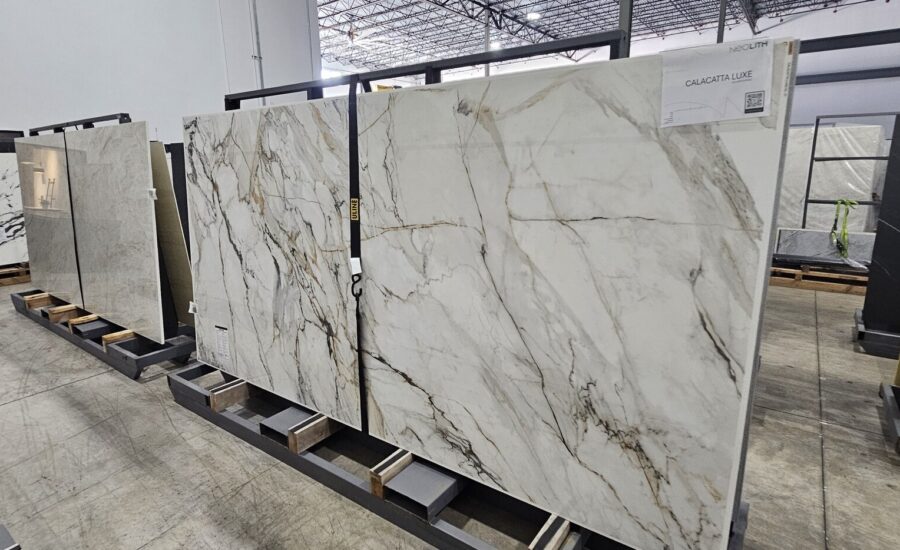
A natural metamorphic stone, harder than granite, with the veining people want from marble. Heat-tolerant and very scratch-resistant; needs sealing once or twice a year. Two cautions: every slab is unique, so the slab you approve is the slab you get; and some stones sold as “soft quartzite” are in fact marble or dolomite and will etch — we check the stone, not the label. Price sits above quartz and granite.
Granite
Natural, heat-tolerant, durable, and in 2026 often the same price tier as quartz. Needs sealing periodically (a water-drop test tells you when). Patterns range from quiet to very busy; the busy ones hide crumbs and the quiet ones read like quartzite at a lower price. Granite is also the right answer for an outdoor kitchen: sun and salt air do not affect it the way they affect resin.
Marble
Beautiful and soft. It etches from lemon juice and wine, scratches under a dragged pot, and needs sealing. Right for a bathroom vanity or a baking station; a working family kitchen in Florida will show every week of its life on marble within a year. If you want the look, look at quartzite or a marble-look quartz first.
Price tiers, plainly
| Material | Tier | Sealing | Heat | Sun / outdoors |
|---|---|---|---|---|
| Engineered quartz | Base | Never | Careful | No |
| Granite | Base | Periodic | Yes | Yes |
| Quartzite | Higher | Periodic | Yes | Mostly |
| Marble | Higher | Periodic | Yes | Poor choice |
In our 2026 contracts a quartz countertop fabricated and installed for a full kitchen ran $4,500–$5,500; waterfall edges, full-height backsplashes and multi-slab kitchens add slab area, and quartzite and marble sit above that. The countertop line is shown separately on the itemized quote so you can compare it with any stone-shop estimate.
What matters more than the material
Templating. A countertop templated from a drawing before the cabinets are in will show it forever: uneven overhangs, seams in the wrong place, a sink cut-out that does not match the base. We template on the installed, leveled cabinets and approve the slab layout with you before fabrication — that is the difference between a good top and an expensive one. See how it fits into the kitchen on our countertops page.